"Hayk's Arrow" Armenian Strategic Center

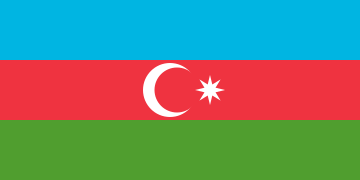
Azerbaijan

Azerbaijan’s official diplomacy combines Armenia normalisation, regional infrastructure, a declared alliance with Türkiye and outreach to Western and Asian partners.

About this profile

Azerbaijan’s official diplomacy combines Armenia normalisation, regional infrastructure, a declared alliance with Türkiye and outreach to Western and Asian partners. This profile maps those overlapping relationships through dated primary records while treating official claims as attributed positions rather than independently established outcomes.

On this page

Agreements and instruments

6

Six instrument-level distinctions identify the applicable institution, legal stage and implementation limit. Status is checked on 1 November 2026; entry dates describe the instrument, not the date of retrieval.

Agreements and instruments
IndicatorValue and reference period
EU bilateral legal frameworkThe Commission identifies the PCA as the bilateral legal basis. This row does not describe an EU Association Agreement/DCFTA or assume that negotiations for a new framework have put one into force.Partnership and Cooperation Agreement in force since 1999Status checked 1 November 2026; instrument dates stated separatelyFramework / agreement[151]
EU candidate status and accession stageFormal status in the Council’s current candidate-country list; domestic aspirations or partnership language do not confer EU candidate status.Not listed among the EU’s nine candidate countriesStatus checked 1 November 2026; instrument dates stated separatelyFramework / agreement[150]
WTO membership or accessionThe WTO observer list and accession record establish a different stage from Armenia’s and Georgia’s membership. The date is the Working Party’s establishment, not a membership date or a forecast of admission.Observer government; accession Working Party established 16 July 1997Status checked 1 November 2026; instrument dates stated separatelyFramework / agreement[153][152]
EAEU membershipInclusion in the Union’s closed list of five Member States. Observer, dialogue and cooperation arrangements are outside this membership measure.Not a Member State in the Union’s five-country listStatus checked 1 November 2026; instrument dates stated separatelyFramework / agreement[148]
Council of Europe and ECHRState membership and the Convention’s entry into force are two distinct legal dates. Neither measures PACE credentials or participation, case admissibility, compliance or the availability of a remedy in a particular dispute.Council member: 25 January 2001; ECHR in force: 15 April 2002Status checked 1 November 2026; instrument dates stated separatelyFramework / agreement[149]
US charter: implementation and scopeBilateral Azerbaijan–US framework. Project-roadmap intentions and annual meetings are not evidence that a particular project is financed, customs procedures are operational or Armenia has acquired rights under this instrument.10 February 2026 charter covers connectivity, investment and security; working groups may be establishedStatus checked 1 November 2026; instrument dates stated separatelyFramework / agreement[91]

For Armenia, Azerbaijan’s observer/accession position at the WTO is a material distinction from two neighbouring WTO members. A negotiating brief should identify which transit, customs and market-access commitments would come from an actual bilateral or regional agreement, rather than assume identical multilateral remedies across all three countries. The EU PCA and US charter show established channels for engagement, but their titles do not quantify leverage. Request the applicable implementing text, competent authority and dispute procedure for each concrete proposal. [153][152][151][91]

Use the US charter’s project and working-group language as a monitoring checklist: who formed the group, which roadmap was adopted, what budget was committed, and which operating permission followed? Record an item as unresolved when that evidence is missing; do not mark it implemented merely because the charter envisages it. Armenia should assess each proposed connection against its own jurisdiction, reciprocal access and enforceable safeguards. Common Council of Europe/ECHR participation is relevant to legal planning, while PACE representation and the prospects of any specific case require separate checks. [91][149]

Scope and limitations

This is a dated institutional comparison, not an influence ranking or a legal opinion on a specific transaction or case. A framework, membership or signed declaration does not itself prove project completion, financing, duty-free access or operational permission. Council of Europe/ECHR status is distinct from PACE participation and case-specific remedies. [151][150][153][152][148][149][91]

Compare Armenia, Azerbaijan and Georgia

What this means for Armenia

Priority and sequence

Armenia's choice is how to convert several partners' interest in regional connectivity into reciprocal, usable rights without treating their Azerbaijani relationships as a referendum on Armenia.

Armenia's choice is how to convert several partners' interest in regional connectivity into reciprocal, usable rights without treating their Azerbaijani relationships as a referendum on Armenia. The EU statement and US charter describe mechanisms and objectives, while the Washington text distinguishes political agreement from later legal and operational stages. Azerbaijan's institutional reach can advance its proposals, but does not remove Armenian consent. Armenia should therefore invest first in a coherent implementation mandate that can travel across diplomatic channels, rather than offer different practical concessions to each partner. [142][143][91]

Why this comes first

Prioritise negotiation-mandate because unresolved domestic authority or sequencing can make later project promotion incoherent. A mandate identifies which benefit Armenia seeks, what it can approve and what requires reciprocal action. This is a constrained legal and operating task, not an attempt to anticipate every future dispute. Its opportunity cost is fewer simultaneous proposals; that can be justified when the same officials must negotiate, obtain approval and deliver implementation. [142][91][143]

Proposed sequence

Proposed horizons run from authorisation. Later stages depend on the conditions below; these are analytical choices, not adopted deadlines or funding commitments.

  1. First 90 days

    In the proposed first 90 days, reconcile the relevant published texts with Armenian legal powers and operator requirements. Identify reversible preparatory steps separately from commitments requiring approval. Prepare a plain-language explanation of the intended Armenian benefit and unresolved points, using existing coordination and respecting legitimate negotiation confidentiality. [142][91]

  2. 3–12 months

    During the proposed three-to-twelve-month phase, advance one partner-ready project with evidenced demand and a domestic owner. A proposed matched sequence is Armenian approval, counterpart confirmation of agreed access and documents, then verified trial use before an optional irreversible next phase. Seek an agreed pause and review if a counterpart milestone is missed; do not assume that power already exists. Lawful unrelated technical work can continue through authorised channels. Compare delivered service with the mandate rather than count meetings as implementation. [91][143][87]

  3. Beyond 12 months

    Beyond twelve months, institutionalise only channels producing usable agreements, resolved cases or delivered services. Review any recurring Armenian staffing and expenditure before expansion. Keep peaceful technical problem-solving available during political disagreement, while publishing a clear record of which commitments remain proposals, which are legally effective and which are operating. [91][142][143]

Main constraint

The binding constraint is agreement on implementable obligations across competent authorities. Armenia cannot unilaterally create foreign access, investor finance or partner guarantees. Legal, diplomatic and operational specialists must work from compatible assumptions; a new standing body is not automatically needed. Funding for project preparation is distinct from financing construction and continuing operations. Each requires its own lawful decision and credible owner before an international announcement is presented as an Armenian benefit. [142][91][143]

When another option would be better

Lead with public-scrutiny when a published draft is moving toward a consequential domestic approval and informed review is the immediate bottleneck. A live disruption affecting lawful commerce may instead justify technical-channels first, within existing authority. Neither exception requires suspending the broader relationship or matching Azerbaijan's investment scale. The test is which Armenian decision cannot safely wait, and whether the chosen sequence preserves rather than spends future options. [142][143][84]

Legal milestones shape practical bargaining

The Washington declaration and subsequent partnership documents create political support for connectivity, but their stages and parties differ. Initialling a peace text, signing a declaration, adopting an implementation framework and delivering an operating service are not interchangeable. For Armenia, the benefit is a written basis for reciprocity, sovereignty and jurisdiction; the exposure is accepting irreversible obligations before practical rights and procedures are settled. Azerbaijani accounts of progress are evidence of its position, not a substitute for Armenian consent or counterpart implementation. Armenia's negotiating leverage comes from specifying workable reciprocal arrangements and credible sequencing, while retaining the ability to distinguish a delay in one project from the entire relationship. [142][91][143]

Partners balance several interests simultaneously

Türkiye's institutional alliance, European energy cooperation, US connectivity engagement and Central Asian investment links give Azerbaijan overlapping channels of influence. These relationships do not oblige every partner to take the same position on every Armenian issue. Equally, Armenia cannot assume that a partner sympathetic to its concerns will abandon commercial links with Azerbaijan. The implication is practical: Armenian proposals are stronger when they identify a shared service, investment or stability benefit and an implementable division of responsibilities. Diplomatic diversification should enlarge Armenia's options without confusing attendance at meetings with financing, security guarantees or market access. Partner incentives can support peaceful cooperation, but must be assessed for each project and decision. [144][37][91][143]

Institutions turn agreements into durable relationships

The Uzbek joint fund, recurring interstate councils and Western working-group provisions show how diplomatic relationships can accumulate administrative capacity over time. Armenia's relative influence may weaken if it offers only broad statements while other actors present financed projects, technical staff and recurring decisions. The response is not to mimic the scale of Azerbaijani funding or treat all neighbouring cooperation as hostile. It is to prepare fewer, credible Armenian proposals, maintain professional follow-through and publish a clear distinction between agreements and delivered benefits. Institutional continuity also matters when political disputes arise: technical channels can preserve lawful trade, resolve practical problems and reduce the cost of misunderstanding without requiring agreement on every contested issue. [37][126][91][87]

Research

Armenia: normalisation and implementation

The Azerbaijani presidency’s accounts of the October 2025 Copenhagen, February 2026 Abu Dhabi and August 2026 Bishkek meetings place trade, transport and confidence-building alongside the peace process. The August statement refers to the 2025 Washington declaration and initialling of an agreed peace text. These are dated official accounts of diplomatic activity; initialling, signature, ratification and implementation are distinct stages and should remain separately recorded. [36][95][135]

For Armenia, the analytical focus is the delivery chain from a diplomatic undertaking to a usable arrangement. The presidency describes petroleum exports and third-country transit as benefits of normalisation, but a strategic assessment should separately establish volumes, conditions, continuity and dispute procedures. The practical opportunity is broader market access; the corresponding vulnerability is reliance on permissions or services that can change. The official narrative is therefore evidence of stated policy, not independent proof of every reported outcome. [62][59]

Georgia and Iran: neighbouring connections

The April and May 2026 accounts of meetings with Georgian leaders emphasise strategic partnership, joint transport and energy projects, investment and connectivity. The October 2026 account of talks with Iran describes the Aghband–Kelaleh project as nearing its final stage. This is the Azerbaijani side’s characterisation of progress, not independent confirmation that the facility was commissioned. Together, the records show neighbouring relationships being discussed through infrastructure and economic cooperation. [53][74][20]

Armenia’s interest is whether these relationships create complementary routes or competing arrangements. Cooperation involving Georgia can affect shared access to the Black Sea and regional electricity; Iranian links can alter southern transit choices. The documents do not justify treating either neighbour as a single fixed alignment. A stronger assessment follows project terms, border management and financing alongside senior meetings, recognising that cooperation in one sector can continue amid disagreement in another. [13][44][118]

Türkiye and Pakistan: alignment and its scope

The 2026 accounts of meetings with Türkiye’s president and foreign minister repeatedly use the language of strategic alliance and discuss energy and logistics. Trilateral and bilateral meetings involving Pakistan place political, economic and military cooperation in the same relationship. This is stronger stated alignment than a routine commercial exchange, but the scope of each actual obligation must be established from the relevant agreement rather than inferred from ceremonial language. [33][28][116]

For Armenia, the central task is to distinguish reinforcement across sectors from automatic collective action. Defence cooperation belongs in the Defence Observatory, while this profile documents how diplomatic support, transport access and institutional contacts can reinforce it. Justice, parliamentary and ministerial exchanges also show the breadth of the relationship beyond leaders’ summits. Their existence is evidence of repeated engagement; the practical effect still depends on implementation and the issue at stake. [43][119][56]

Russia: cooperation alongside unresolved disputes

The October 2025 Dushanbe meeting transcript and March 2026 reception of Russian Deputy Prime Minister Alexei Overchuk place the December 2024 AZAL aircraft tragedy within the bilateral agenda. The later account describes intended practical steps and also discusses trade, investment, industry and transport. The sequence illustrates a relationship in which a serious dispute and continuing economic cooperation are addressed together, rather than a clean switch between partnership and rupture. [128][84]

Armenian policy analysis should therefore examine which institutions and commercial channels remain active when political rhetoric changes. The source records do not settle responsibility for the aviation incident or prove that announced measures were completed. They do show that transport and economic links remained part of senior-level discussions. Comparing this with Azerbaijan’s parallel Western and regional contacts helps evaluate diversification as overlapping relationships rather than membership in a single exclusive geopolitical camp. [84][15]

The 22 February 2022 Russia–Azerbaijan declaration formalises allied interaction alongside sovereignty and non-interference. Its assistance clause says the parties may consider military aid within separate treaties and existing legal obligations; it does not create an unconditional automatic response. The original instrument remains relevant context for later cooperation and disputes, without proving subsequent implementation. [146]

United States and Europe: connectivity diplomacy

The strategic partnership charter published on 10 February 2026 with the United States explicitly addresses transport, energy, data connectivity and trade facilitation, including TRIPP. Separate January and July 2026 European contacts emphasise energy, regional transport and support for the peace agenda. These records show Azerbaijan presenting connectivity as a diplomatic asset across Western relationships, although a declaration of cooperation is different from a financed and operating project. [91][99][46]

For Armenia, opportunities arise when regional programmes include reciprocal access and durable implementation safeguards. Risks arise when broad connectivity language leaves practical rights, control or dispute resolution unclear. The useful comparison is therefore between agreement text and subsequent financing, regulatory and operating decisions. European energy cooperation, US strategic engagement and relations with individual European states should be recorded separately; none is a complete proxy for the other or for a common Western position. [103][80][3]

China, Central Asia and multilateral reach

The 2026 records include Chinese government and legal-institutional contacts, meetings with Kazakh and Uzbek leaders and engagement with the OIC, UN and Turkic organisations. In the October Kazakhstan account, the presidency reports an online inauguration of a Trans-Caspian fibre-optic line. That statement is a specific official milestone claim; operational performance and commercial traffic remain questions for technical operators. The pattern is an effort to connect bilateral ties with regional infrastructure and multilateral platforms. [52][34][6]

For Armenia, this reach creates both potential partners and venues where Azerbaijani narratives can gain visibility. Counting meetings is insufficient: substantive agreements, joint ventures, financing and recurring institutional mechanisms carry more weight than courtesy calls. The country’s simultaneous engagement with multiple organisations should be examined issue by issue. Official source language about peace, solidarity or regional leadership is retained as the speaker’s position; the observatory’s analytical conclusion is the diversification of channels, not endorsement of those claims. [55][2][49][81]

Counterpart evidence: Armenia’s prime-ministerial website publishes the August 2025 declaration, including the distinction between initialling and subsequent signature and ratification. The European Council’s March 2026 joint statement records agreed language on normalisation, connectivity, sovereignty and territorial integrity. These sources confirm the texts and stated positions from other parties; they do not independently certify completion of every trade or infrastructure outcome described by Azerbaijan. [142][143]

D-8 accession had two stages: the Cairo summit accepted Azerbaijan’s application on 19 December 2024; the Secretariat dates full membership to deposit of ratification instruments on 19 March 2025. The organisation’s own release therefore provides a more precise institutional milestone than treating the December announcement as the completed accession process. [145]

CICA’s 15 October 2026 summit extended Azerbaijan’s chairmanship for 2026–2028 and approved its nominee Sultan Hajiyev as Secretary General for four years. These are distinct institutional roles: the rotating chairmanship and the Secretariat leadership. The outcome records appointments and mandates, not a military alliance or binding endorsement of every Azerbaijani foreign-policy position. [147]

What the agreement frameworks commit to

The June 2021 Shusha Declaration supplies a concrete foundation for the Türkiye relationship. It calls for foreign-policy coordination, regular consultations, mutual support in international organisations, defence cooperation and coordinated energy and transport development. Its assistance clause provides for urgent discussion of the volume and form of assistance when either side considers itself threatened; it does not specify an automatic identical response to every incident. Repeated ministerial and parliamentary contacts in 2026 fit this broader institutional framework. For Armenia, Turkish involvement is therefore a continuing structural factor spanning diplomacy, production and routes, rather than only an occasional leaders’ statement. [144][76][28]

The February 2026 US charter and March EU statement use different implementation machinery. The charter envisages working groups, project lists and roadmaps within three months, and meetings at least annually. The EU statement records a high-level economic working group and support through Global Gateway, but still calls for finalising a new comprehensive bilateral agreement. Thus the documented achievement is establishment or commitment to cooperation mechanisms; neither text proves every envisaged investment has reached financial close. For Armenia, these mechanisms can create additional negotiating channels around reciprocal connectivity, but financing decisions and operating conditions determine whether the wider diplomatic attention produces usable infrastructure. [91][143]

Investment and routes as instruments of influence

Central Asian relationships combine institutions with tangible commercial interests. At the August 2026 Uzbekistan council, Aliyev said around USD160 million of the joint fund’s USD500 million capital had been allocated, while his counterpart called for deploying the fund more quickly. Allocation is an official reported financing milestone, distinct from completed investment or realised returns. The same discussion differentiated existing garment production from an additional automotive plant under construction and a proposed joint Caspian fleet. These distinctions matter: a functioning enterprise creates employment and supplier ties now, while a planned fleet offers future route influence only if ships, finance and regular cargo materialise. [37][55][126]

Neighbouring relationships operate through similarly concrete incentives. Georgia provides access to western transport and energy markets, while Iran-related discussions focus on the North–South route and the Aghband–Kelaleh bridge. Russian talks continue to include trade and industry despite the aviation dispute. These overlapping interests explain why closer Western engagement does not mechanically erase regional cooperation. For Armenia, the consequence is a network of partners with their own transport income, supply security and investment incentives. Diplomatic alignment on one dispute cannot safely be treated as a promise that a partner will abandon every Azerbaijani commercial relationship; specific projects and reciprocal Armenian benefits remain the effective unit of negotiation. [87][13][53][74][84]

Risks and opportunities

Risks

Ambiguous practical access rights can leave Armenia exposed to changing permissions despite broad diplomatic support for connectivity. [91][142]

Durable alliance and investment institutions can reinforce Azerbaijan’s diplomatic reach; Armenia cannot assume that another partner’s bilateral dispute dissolves these networks. [144][37]

Opportunities

Shared commitments to sovereignty and reciprocal connectivity provide Armenia with written reference points for negotiating implementable arrangements. [142][143]

Overlapping Western and neighbouring interests create several venues for practical cooperation; a narrowly defined transport or trade agreement may progress without complete geopolitical alignment. [91][87][53]

Conditional scenarios

These scenarios explore how documented drivers could affect Armenia. They are conditional analytical paths, not predictions or assigned probabilities.

Reciprocity is implemented

Conditional scenario, not a forecast: if diplomatic frameworks become financed projects with reciprocal access and clear jurisdiction, Armenia could gain practical connectivity while Azerbaijan gains a Nakhchivan link. Multiple interested partners could help sustain implementation where their commercial incentives align. [142][143][91]

Institutional asymmetry persists

Conditional scenario, not a forecast: if Azerbaijan deepens investment and alliance institutions while bilateral access remains incomplete, its partners may expand cooperation without equivalent Armenian gains. Armenia would need concrete counterpart commitments and its own commercially credible proposals to convert diplomatic attention into benefits. [144][37][126]

What to watch

Follow implementation stages of Armenia-related agreements and verify reported trade through corresponding Armenian and operating records. [36][95]

Separate strategic labels from binding obligations and delivered projects across every partner relationship. [91][76]

Source library

145 checked source documents · 8 checked excerpts
Coverage and methodology

The count includes distinct documents whose content was retrieved and checked for relevance to this profile. Translations, duplicate links and generic homepages are excluded. A document may support more than one topic when its content is relevant to each. Historical documents retain their original dates; they do not establish that a project or policy remains unchanged today.

Sources labelled “Excerpt checked” were reviewed only in the retained relevant passage. They can support the cited claim but are excluded from the full-document total.

Filters

153 / 153 · Original sources

Filters use the source date recorded in this library. Indicator reference periods are shown separately.

  1. Ilham Aliyev received Secretary-General of UN Tourism
    President of Azerbaijan · 26 Oct 2026 · Sources checked: 1 Nov 2026
  2. Ilham Aliyev received OIC Secretary-General
    President of Azerbaijan · 26 Oct 2026 · Sources checked: 1 Nov 2026
  3. Ilham Aliyev received Dutch foreign minister
    President of Azerbaijan · 26 Oct 2026 · Sources checked: 1 Nov 2026
  4. Ilham Aliyev received newly appointed Indian ambassador to Azerbaijan
    President of Azerbaijan · 16 Oct 2026 · Sources checked: 1 Nov 2026
  5. Ilham Aliyev received Minister of External Affairs of India
    President of Azerbaijan · 23 Oct 2026 · Sources checked: 1 Nov 2026
  6. Ilham Aliyev met with President of the Republic of Kazakhstan Kassym-Jomart Tokayev
    President of Azerbaijan · 15 Oct 2026 · Sources checked: 1 Nov 2026
  7. Ilham Aliyev met with President of Israel
    President of Azerbaijan · 14 Oct 2026 · Sources checked: 1 Nov 2026
  8. Ilham Aliyev received Bahrain’s Minister of Foreign Affairs
    President of Azerbaijan · 14 Oct 2026 · Sources checked: 1 Nov 2026
  9. Ilham Aliyev met with President of Tajikistan
    President of Azerbaijan · 14 Oct 2026 · Sources checked: 1 Nov 2026
  10. Ilham Aliyev met with Vietnamese Vice President
    President of Azerbaijan · 14 Oct 2026 · Sources checked: 1 Nov 2026
  11. Ilham Aliyev received Sri Lankan Minister of Foreign Affairs, Foreign Employment and Tourism
    President of Azerbaijan · 14 Oct 2026 · Sources checked: 1 Nov 2026
  12. Ilham Aliyev held expanded meeting with President of Laos
    President of Azerbaijan · 13 Oct 2026 · Sources checked: 1 Nov 2026
  13. Ilham Aliyev received Iranian Interior Minister
    President of Azerbaijan · 12 Oct 2026 · Sources checked: 1 Nov 2026
  14. Ilham Aliyev held expanded meeting with Prime Minister of Cambodia
    President of Azerbaijan · 12 Oct 2026 · Sources checked: 1 Nov 2026
  15. Ilham Aliyev and Head of Chechen Republic of Russia visited Baku White City
    President of Azerbaijan · 10 Oct 2026 · Sources checked: 1 Nov 2026
  16. Ilham Aliyev received Head of Chechen Republic of Russia
    President of Azerbaijan · 10 Oct 2026 · Sources checked: 1 Nov 2026
  17. Ilham Aliyev received UK Minister of State for Trade
    President of Azerbaijan · 6 Oct 2026 · Sources checked: 1 Nov 2026
  18. Ilham Aliyev received newly appointed ambassador of Malaysia to Azerbaijan
    President of Azerbaijan · 5 Oct 2026 · Sources checked: 1 Nov 2026
  19. Ilham Aliyev met with President of Turkmenistan in Turkmenbashi
    President of Azerbaijan · 8 Oct 2026 · Sources checked: 1 Nov 2026
  20. Ilham Aliyev met with President of Iran in Turkmenbashi
    President of Azerbaijan · 9 Oct 2026 · Sources checked: 1 Nov 2026

Documented diplomatic milestones

Selected declarations and multilateral decisions, in event-date order.

  1. Signed

    Shusha Declaration signed

    Türkiye–Azerbaijan declaration includes consultation and cooperation provisions.

  2. Signed

    Russia allied-interaction declaration signed

    The declaration’s assistance clauses retain treaty and UN Charter conditions.

  3. Reported result

    D-8 ratification deposited

    The deposit marks full membership, separately from acceptance of the application in December 2024.

  4. Adopted

    CICA chairmanship extended

    The summit extended Azerbaijan’s chairmanship for 2026–2028; this is an institutional decision, not a measure of influence.

Selected documented milestones, not a complete diplomatic record or a measure of influence. Dates identify the stated event; source dates, where supplied, are listed separately and may differ. An agreement or meeting does not establish implementation.

Regional legal frameworks and institutional stages

Sources checked 1 Nov 2026

Five common institutional questions compare Armenia, Azerbaijan and Georgia without scoring diplomatic strength. Read agreement scope, formal status and implementation as separate dimensions.

On smaller screens, scroll the table sideways to compare all three countries.

Compare Armenia, Azerbaijan and Georgia
Indicator🇦🇲 Armenia🇦🇿 Azerbaijan🇬🇪 Georgia
EU bilateral legal frameworkAgreement type and entry into forceRead with stated qualificationsCEPA fully in force from 1 March 2021Status checked 1 November 2026; instrument dates stated separatelyFramework / agreementSourcePartnership and Cooperation Agreement in force since 1999Status checked 1 November 2026; instrument dates stated separatelyFramework / agreementSourceAssociation Agreement, including DCFTA, in force from 1 July 2016Status checked 1 November 2026; instrument dates stated separatelyFramework / agreementSource 1Source 2
EU candidate status and accession stageFormal EU status and process stageMatched period and definitionNot listed among the EU’s nine candidate countriesStatus checked 1 November 2026; instrument dates stated separatelyFramework / agreementSourceNot listed among the EU’s nine candidate countriesStatus checked 1 November 2026; instrument dates stated separatelyFramework / agreementSourceCandidate since 14–15 December 2023; accession process de facto halted in 2024Status checked 1 November 2026; instrument dates stated separatelyFramework / agreementSource
WTO membership or accessionMembership or observer/accession stageMatched period and definitionMember since 5 February 2003Status checked 1 November 2026; instrument dates stated separatelyFramework / agreementSourceObserver government; accession Working Party established 16 July 1997Status checked 1 November 2026; instrument dates stated separatelyFramework / agreementSource 1Source 2Member since 14 June 2000Status checked 1 November 2026; instrument dates stated separatelyFramework / agreementSource
EAEU membershipMember State or non-memberMatched period and definitionMember; one of five Member StatesStatus checked 1 November 2026; instrument dates stated separatelyFramework / agreementSourceNot a Member State in the Union’s five-country listStatus checked 1 November 2026; instrument dates stated separatelyFramework / agreementSourceNot a Member State in the Union’s five-country listStatus checked 1 November 2026; instrument dates stated separatelyFramework / agreementSource
Council of Europe and ECHRState membership and treaty-entry datesMatched period and definitionCouncil member: 25 January 2001; ECHR in force: 26 April 2002Status checked 1 November 2026; instrument dates stated separatelyFramework / agreementSourceCouncil member: 25 January 2001; ECHR in force: 15 April 2002Status checked 1 November 2026; instrument dates stated separatelyFramework / agreementSourceCouncil member: 27 April 1999; ECHR in force: 20 May 1999Status checked 1 November 2026; instrument dates stated separatelyFramework / agreementSource

Definition and coverage

EU bilateral legal framework

Which bilateral EU treaty framework is in force? Qualified: agreement types differ in scope and depth. Their titles and entry dates do not establish identical tariff schedules, rules of origin, procurement access or regulatory rights.

Reading for Armenia

Armenia should build a measure-by-measure CEPA implementation plan. Using a Georgian corridor or partner does not by itself transfer Georgia’s EU preferences to Armenian goods; verify the applicable product rules and authority.

EU candidate status and accession stage

What candidate status and accession-process stage does the Council currently record? Same formal status question at the same review date. Georgia’s retained candidate status and halted process are stated together; the other two are absent from the Council’s closed candidate list.

Reading for Armenia

Keep an Armenian reform programme separate from assumptions about a candidacy or accession date. Georgia shows why formal candidate status and a working accession process need separate monitoring.

WTO membership or accession

Is the country a WTO member or an observer undergoing accession? Same institution, with membership distinguished from observer/accession stage. Membership does not mean zero tariffs or settle whether a particular bilateral obligation or dispute procedure is available.

Reading for Armenia

An Armenian negotiating team should map the legal basis of every proposed transit or trade commitment. Do not assume identical multilateral rights against Azerbaijan and Georgia or treat accession negotiations as completed membership.

EAEU membership

Is the country named in the EAEU’s closed current Member-State list? Same closed five-member list and review date. Membership does not extend to a neighbouring transit state merely because goods cross its territory.

Reading for Armenia

For Armenian route and tariff planning, distinguish EAEU rules from permissions in each non-member transit country. A regional connection needs its own applicable customs and operating arrangements.

Council of Europe and ECHR

When did state membership and ECHR entry into force occur, measured separately? Same state-membership and treaty-entry questions. Dates are historical milestones, not a ranking. PACE credentials, participation disputes, admissibility, jurisdiction and judgment execution are separate matters.

Reading for Armenia

A shared Convention setting can inform Armenian legal strategy, but a case-specific jurisdiction and admissibility review is necessary. Neither state membership nor an earlier entry date promises an enforceable remedy or security protection.

Scope and limitations

This is a dated institutional comparison, not an influence ranking or a legal opinion on a specific transaction or case. A framework, membership or signed declaration does not itself prove project completion, financing, duty-free access or operational permission. Council of Europe/ECHR status is distinct from PACE participation and case-specific remedies.

All status checks share 1 November 2026. Historical accession and treaty dates are not observations of present performance; new legal acts can change the picture after this review.

Several countries or indicators can share one underlying data release. Multiple source links do not mean independent confirmation.

Earlier evidence snapshots

3 · Evidence records

These dated records preserve the earlier research edition. Later source releases and statistical revisions are reflected in the detailed analysis above.

Filters

3 / 3 · Evidence records

Documented

Washington Declaration records normalisation commitments

Reference period: Declaration signed 8 August 2025; published 9 August 2025

The 8 August 2025 declaration records initialling of the peace text and the need for further signing and ratification. Its transport commitments refer to respect for state sovereignty, territorial integrity and jurisdiction.

Details and sources

Original sources (1)

Documented

China partnership upgraded through joint statement

Reference period: Joint statement signed 23 April 2025

On 23 April 2025, Azerbaijan and China signed a statement establishing a comprehensive strategic partnership. It covers political consultations, investment, green energy and transport cooperation, including Trans-Caspian connections.

Details and sources
Documented

Shusha Declaration establishes allied cooperation with Turkey

Reference period: Declaration signed 15 June 2021

Signed on 15 June 2021, the declaration provides for foreign-policy coordination and cooperation across security, economic and cultural fields. It remains an important dated foundation for examining the bilateral relationship.

Details and sources

Original sources (1)

Coverage and methodology

This is a curated starting collection, not an exhaustive country database or a live feed. Each record identifies its reference period and links to original evidence. “Announced” does not mean funded, ratified or operational; those distinctions are stated in the text. Armenia implications are editorial analysis, not source quotations. Census counts, population estimates and forecasts must not be treated as interchangeable. Source-check dates do not change the underlying data period.